
News

A Panel Discussion about Blindness: Breaking down Myths and Misconceptions
Join panelists from across Canada on June 3, 2020 at 7:00 p.m. for a frank discussion about their personal experience being blind or partially sighted.
Ben Mulroney Chats with a Vision Mate Partnership
CNIB brand ambassador, Ben Mulroney, meets with a Vision Mate partnership to discuss how the program has changed during COVID-19.

Ben Mulroney talks International Guide Dog Day
CNIB’s brand ambassador, Ben Mulroney, talks about the importance of International Guide Dog Day with Diane Bergeron, President CNIB Guide Dogs.
Ben Mulroney on Giving Tuesday Now
Listen while CNIB Brand Ambassador, Ben Mulroney, talks about the importance of community on Giving Tuesday Now.

CNIB accessibility project in Wascana Park is the biggest of its kind in North America
Wascana Park just became easier to navigate for people who are blind or partially sighted.
Provincial government responds to the CNIB Foundation about accessibility issues with Ontario Health Card renewal process
Over the last few months, the CNIB Foundation has been asking the Ontario government to ensure Ontarians who are blind, partially sighted or Deafblind have equal access to renewing their health card online. As it stands, a person needs a valid Ontario driver's licence, which is unacceptable because it prevents Ontarians with sight loss from using the same process. At the end of March, we received a response from Lisa Thompson, Minister of Government and Consumer Services.

A chat with Joan Kelley Walker and Angela Bonfanti
Award-winning philanthropist and humanitarian, Joan Kelley Walker, sits down with Angela Bonfanti, Senior Vice President, CNIB Foundation Programs, for an intimate chat about COVID-19 and how it has impacted the sight loss community.
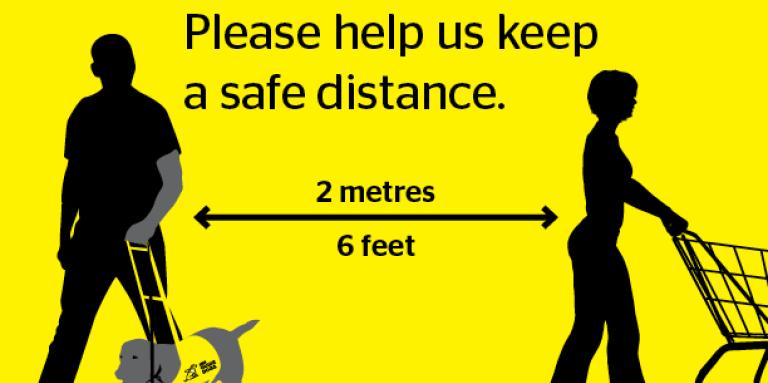
Canadians urged to keep safe distance from guide dog teams
CNIB Guide Dogs is urging Canadians to keep a safe distance from guide dog teams. Lives may depend on it.

Equalize – April 2020
In this issue, we discuss the CNIB Foundation's Ontario Budget Ask. We talk to Jacob Charendoff about a complaint he filed with the Ontario Human Rights Commission, and we learn more about The Optional Protocol to the Convention on the Rights of Persons with Disabilities. Robyn Rennie tells us about her passion for making art accessible, and Bernard Akuoko shares his story about growing up with sight loss as a young black man. We also hear from an advocate in Northern Ontario about his advocacy journey for accessible pedestrian signals.
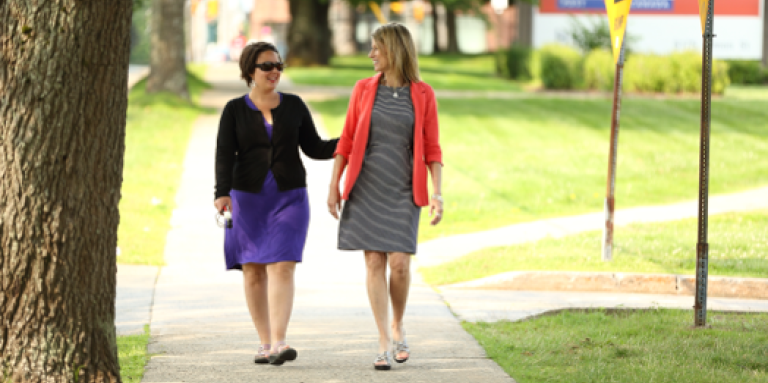
Physical distancing is impractical for many Canadians with sight loss
In response to the Public Health Agency of Canada’s recommendation that everyone keep a distance of at least two metres from others at all times, the CNIB Foundation is urging people to consider something very important: Canadians who are blind or partially sighted – especially those living alone – may need to rely on a sighted guide (a person who guides someone with sight loss) for urgent needs, including traveling safely to the grocery store, the pharmacy, their doctor’s office, the bank, and back home.