
This fall, the CNIB Deafblind Community Services (DBCS) Board of Directors, together with members of the CNIB and VLRC Boards, visited CNIB Lake Joe for their Annual General Meeting.
We caught up DBCS Board Member, Dr Kathryn Jung, to talk about their first impressions of CNIB Lake Joe, the power of connection, and what it means to join the broader CNIB community.
Q: This was your first time visiting CNIB Lake Joe. What did you notice or feel about the environment and community here?
Kathryn: I had never experienced an accessible camp before. It was really emotional for me because of how thoughtfully everything was planned for us. I remember it was so very quiet and peaceful. The smell and the beauty of nature is always so amazing, too.
When we were given a tour of the camp, it was pointed out to us just how much Lake Joe has grown over the years. I was thoroughly impressed with how much our guides knew about supporting people with vision loss, asking me, “Do you want an elbow?”
Everything was even and flat, and the railing through the trail was coloured! I love that idea!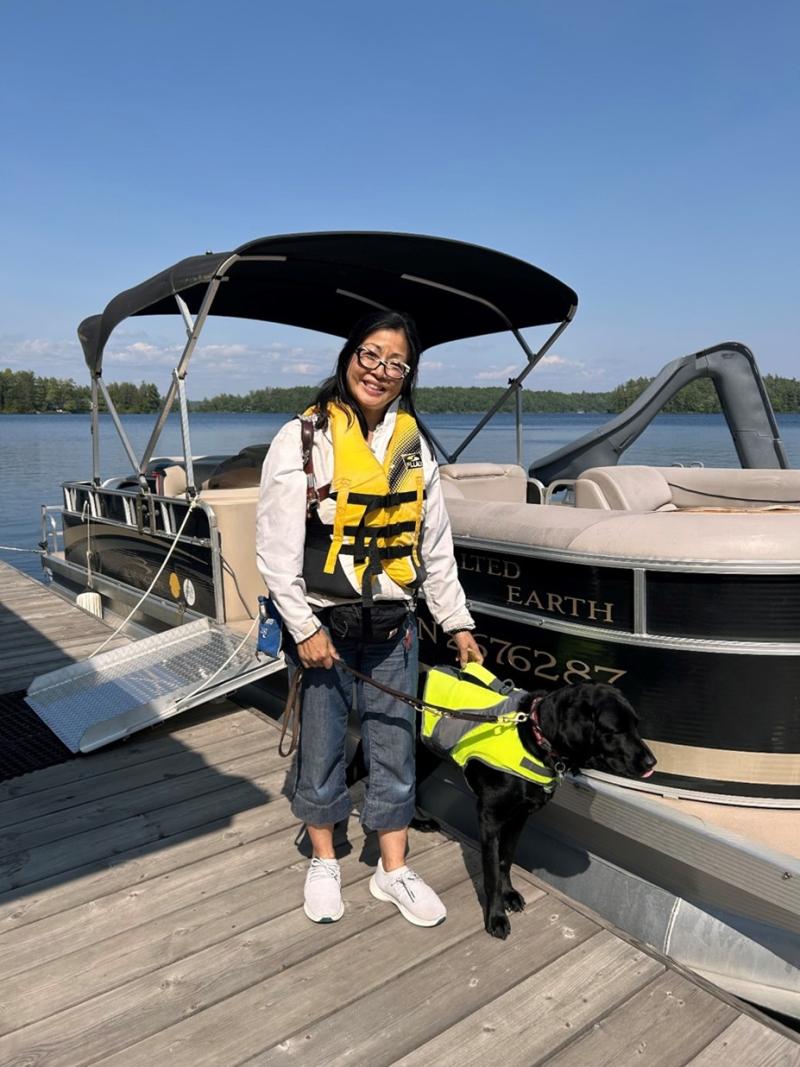
Q: As a new CNIB Deafblind Community Services board member, how did your visit to CNIB Lake Joe help you get a better understanding of CNIB’s work?
Kathryn: It reinforced a number of things for me, primarily the importance of advocacy, accessibility, community, passion, patience and place. I really believe that being at Lake Joe helped me better understand CNIB’s legacy and advocacy work. I see the DBCS’ work as being more unique because Deafblindness is a unique disability that is neither deafness nor blindness, but both.
Q: How do you see Lake Joe complementing CNIB Deafblind Community Services’ mission?
Kathryn: Lake Joe is a fully accessible camp that continues to develop, grow and change for the better. DBCS is about engaging people who are Deafblind with the world around them and supporting each individual where they are at. I had an opportunity to experience this, and it was amazing! I smiled a lot and felt encouraged to be me.
Lake Joe reinforces the importance of “place” as a way of embedding our whole selves into learning, being, and doing. Being able to live independently, as part of an engaged community, is so key for people who are Deafblind, blind, or have low vision.
Q: What opportunities do you see for greater collaboration or learning between CNIB and DBCS?
Kathryn: Being able to meet in the fall/winter season! Deafblindness is 24/7, and support does not end with the end of a workday or season.
Deafblindness can be so isolating, demeaning and hard, but it should not be. Deafblind people have a right to a meaningful and full life.
We can get there together by being present, by making time to meet and collaborate. We must continue to share our stories, to advocate for basic rights and to provide learning opportunities for ALL others, and not just those who are Deafblind.
Learning can happen without words. Learning can happen in place. Learning is a two-way street and can be extended to other opportunities throughout the year.
Q: What did you personally take away from your visit, beyond the meeting itself?
Kathryn: Gratitude. Everyone was so helpful and kind. I truly appreciated my supports and experiences! I am so honoured to have had this experience. I would never have known that Lake Joe existed. I would love to return to Lake Joe during Deafblind week next summer to meet others like me and to try new things with others like me, with support. I’d also like to continue to learn more about how to support people like me and to continue to consider how to educate others about people with Deafblindness.
Q: How did this experience shape your perspective as a leader, an educator, and a member of the Deafblind community?
Kathryn: My fondest memories are of the incredible people I met, the heartfelt and depth of conversations that came from our activities together, and from our meetings where we were encouraged to dream, to innovate, to speak out and to speak up.
I am a better educator, leader and person because of the experience I had at Lake Joe. I was treated with the utmost respect, kindness and compassion. In return, I vow to continue to take on my responsibilities as a DBCS board member with integrity, heart, and an ethic of care.
I happily feel the weight of my role on the Board and am honoured to serve in this capacity – in recognition of individuals who are Deafblind, blind or who have low vision.
Q: What do you wish everyone knew about people who are Deafblind?
Kathryn: I’m just like you. I just want to be happy, to be liked, and to have friends. I just want to be me.