
By: Tommy Leung
When it comes to emergencies, how prepared are you? There are personal emergency plans and emergency kits available, but how well will they actually work in a real emergency for people who are blind, Deafblind, or have low vision?
Emergency preparedness involves more than just checking items off a list, it also has to be accessible. It’s important to make sure you have what you need to respond safely and confidently if something unexpected happens. Unfortunately, many standard emergency kits are not designed with accessibility in mind, which can leave people with disabilities at a disadvantage.
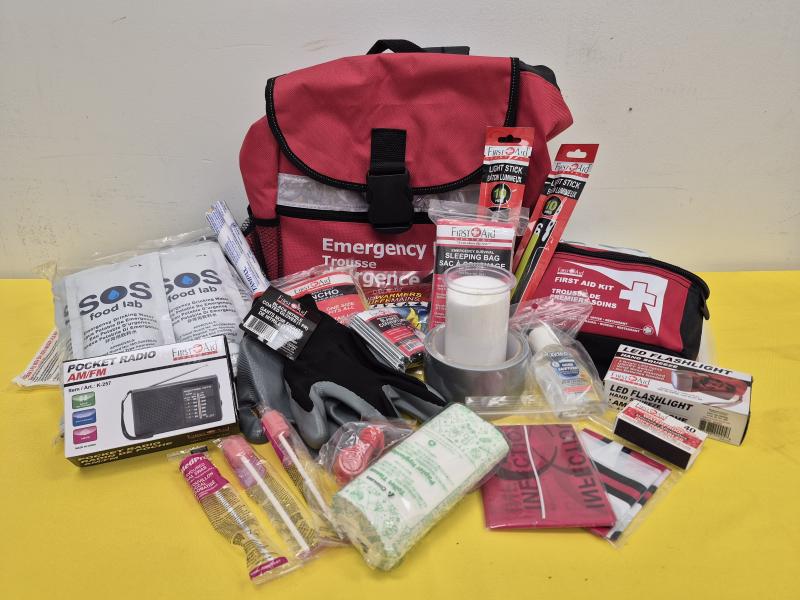
Emergency preparedness kits often include labels, instructions, and packaged items which feature small print, making it impossible for many people who are blind or have low vision to identify and organize them before and during an emergency. Emergency plans also rarely account for the needs of people who rely on assistive technology, service animals, or accessible information to stay safe.
Because of this, we need to think beyond the basics when it comes to being prepared. This may include supplementing your emergency kit with braille or large-print labels, dedicating a location for your supplies, and planning ahead with instructions in accessible formats for you and your family. For example, having alternative battery options for phones or assistive devices during power outages is critical. Your kit should also reflect your daily needs, such as medications, mobility aids like a spare white cane, or guide dog supplies.
To support this work, CNIB hosted Emergency Preparedness workshops in early February for people in BC, funded by Vancouver Coastal Health (VCH) and delivered in partnership with the Alliance for Equality of Blind Canadians (AEBC).
If you weren’t able to attend, this is still a great opportunity to pause and take a fresh look at your own preparedness. Spend a bit of time reviewing what you have, what you rely on every day, and what might need to change to make your plan and kit more accessible and ready when it matters most. AEBC has also published a recording of a virtual information session, available to review at any time.
For further resources about emergency preparedness, please visit AEBC BC Affiliate Chapter’s website.