
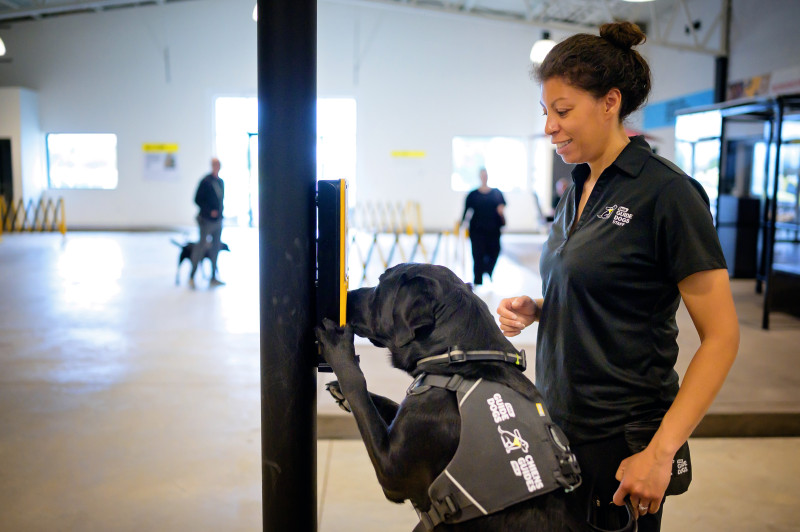
It’s that time of year when social media is full of back-to-school photos: kids with new backpacks, teens heading off to university, and parents wondering where the time went.
But did you know guide dogs have their own version of “university”?
When a future guide dog puppy leaves their puppy raiser’s home and heads into formal training, it feels a lot like move-in day at a university campus.
For the puppy raiser, it’s an emotional moment — saying goodbye to a dog they’ve loved, nurtured, and taught life’s basics. For the dog, it’s the start of something big: a time of learning, friendship, growth, and preparing for a life with purpose.
So, what really happens when these dogs go off to “school”?
Let’s take a tour of life on the Canine Campus!
Move-in Day: Settling into Campus Life
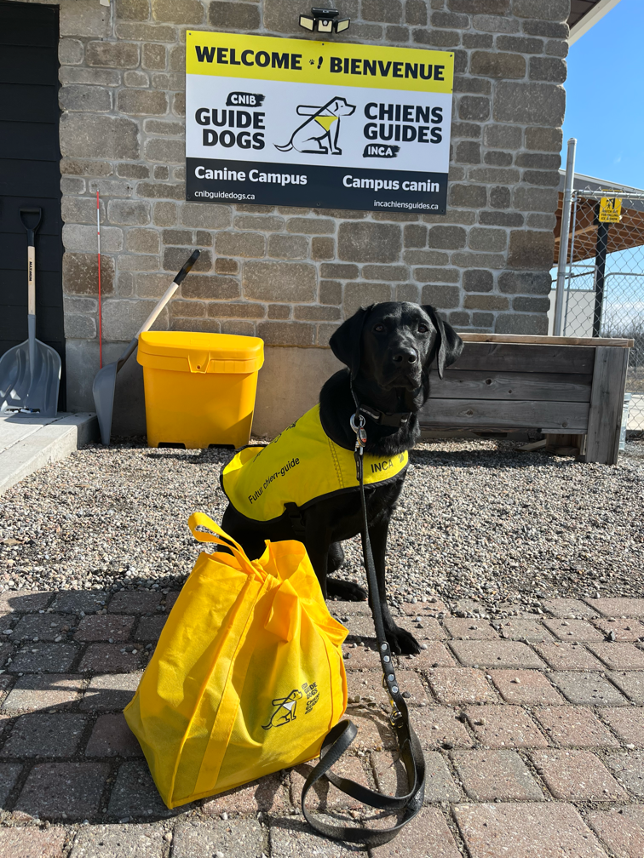
Just like any student’s first day on campus, the first few days of formal training are all about settling in.
The dogs live in glass pods with one or more “pod-mates.” Think of it like having roommates in residence — except these roommates are carefully matched based on play styles and personalities to make life a little easier.
Full-time care and welfare staff act like residence assistants (RAs), creating personalized enrichment plans to keep each dog happy, healthy, and engaged.
Not every dog adapts quickly to pod life, and that’s okay. Some might take a little extra time, or even stay with volunteer boarders for a while, just as some students prefer off-campus living.
At the CNIB Guide Dogs Canine Campus, every dog is set up for success, no matter their pace.
Meeting the Professors: The Guide Dog Trainers
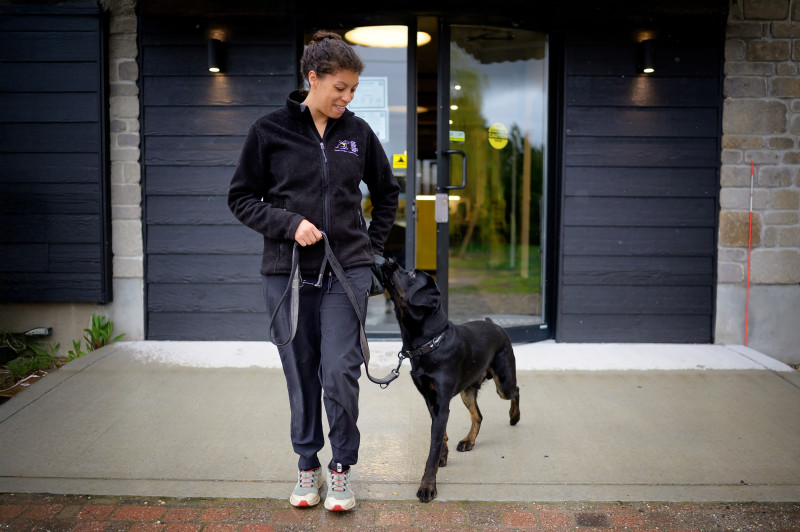
The dogs are paired with a Guide Dog Trainer (GDT) prior to arriving at the Canine Campus — their very own “professor.”
Trainers usually have three to six dogs, and they spend the first few days building trust.
Picture a professor who doubles as a best friend, coach, and mentor rolled into one.
The dogs and trainers' bond through cuddles, grooming, play, walks, and brushing up on obedience cues.
This relationship is the foundation for everything that follows. A dog that feels supported and safe is ready to begin learning the important tasks of guide work.
Orientation Week: Learning the Basics
Every university student experiences freshman orientation, and so do these dogs!
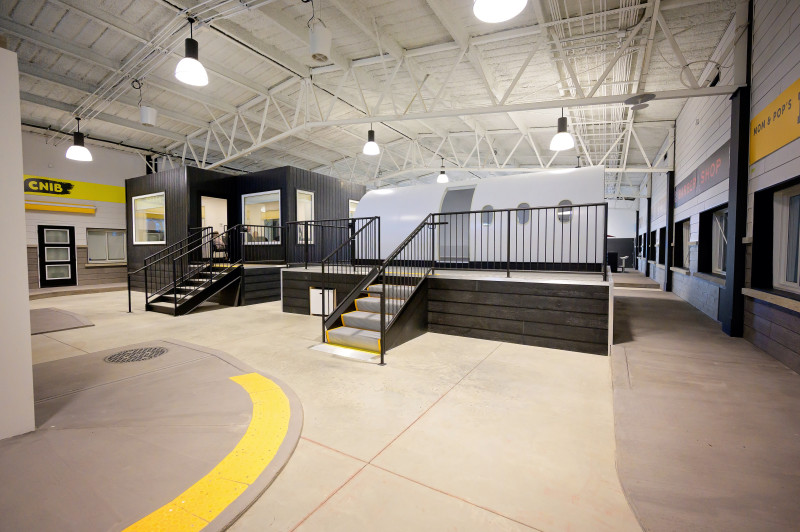
Instead of campus tours and student clubs, in the first month at the Canine Campus future guide dogs are introduced to new spaces and new gear — like the indoor city, the body piece of the guide dog harness, and getting used to rides in the training van.
These experiences help prepare them for the wide variety of environments they’ll eventually encounter.
It’s all about exposure without pressure, just like orientation week for humans. The goal is to help the dogs feel confident in a variety of settings.
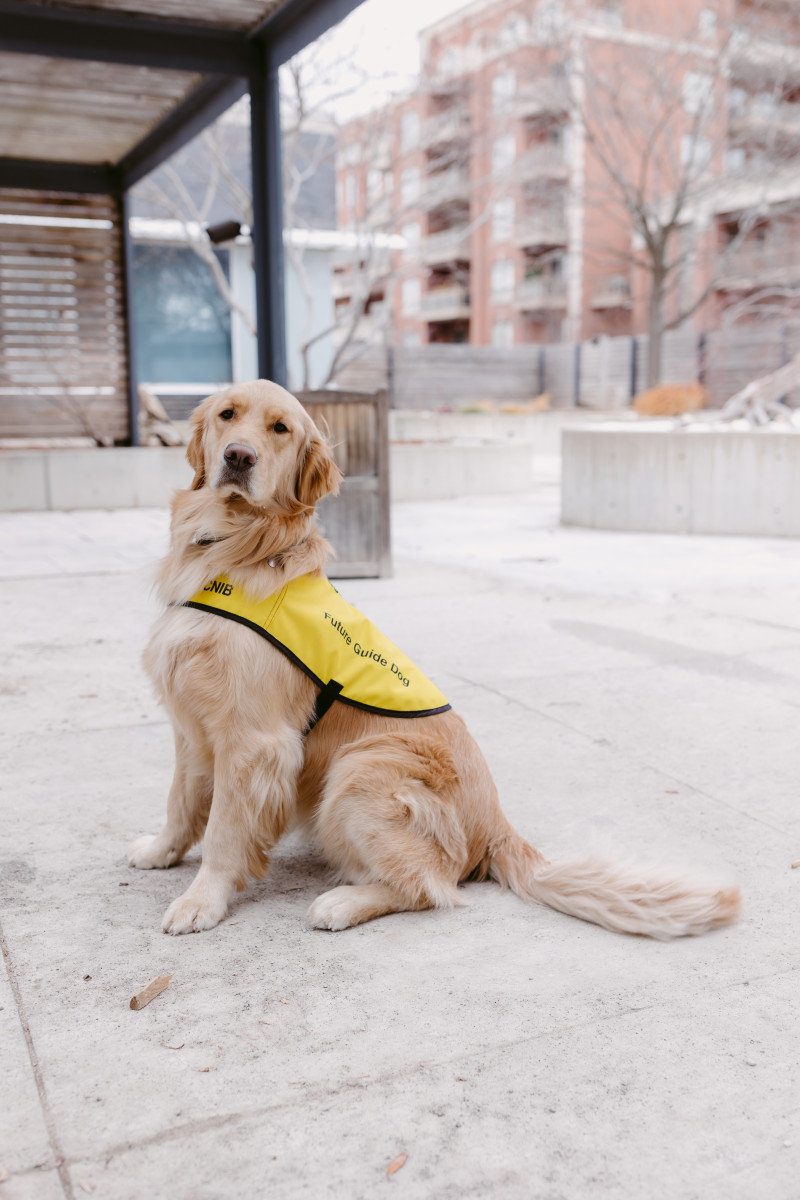
Midterms: The Four-Week Assessment
By the four-week mark, it’s time for the first big test — an obedience assessment.
This is like a midterm exam that decides if the dog is ready to move on to the next level of training.
If a dog struggles, no problem. Trainers come up with a plan to support them to get where they need to be and complete a reassessment later. After all, not everyone aces their midterms the first time around!
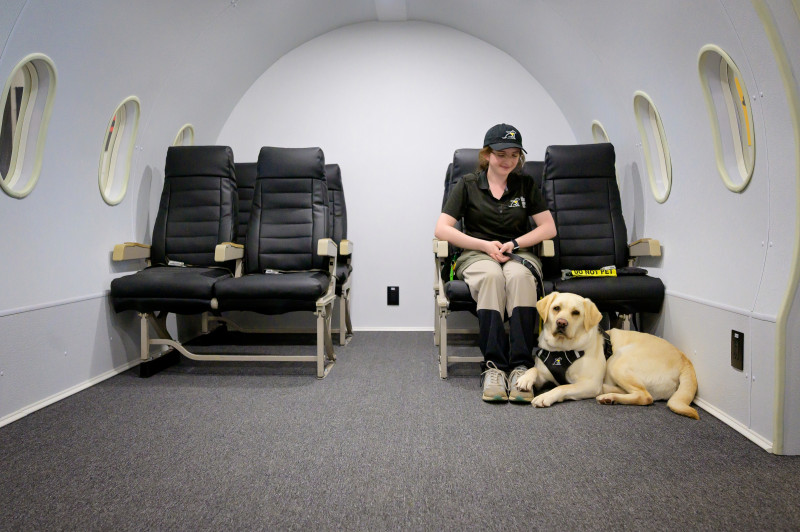
Class Schedules and Study Sessions
In early stages of training, dogs are introduced to their guide dog harness. Trainers start by putting on the body piece and in later sessions will attach the handle.
Training sessions become a regular part of their “class schedule,” with two to three lessons a day. These include obedience drills, free runs where they practice recall, and carefully guided training exercises while on walks.
At this stage, trainers use “errorless learning” — showing the dogs how to succeed and making each lesson positive and fun. Early assignments include stopping at curbs, avoiding obstacles, and learning the very first steps of guiding.
Field Trips and Advanced Courses
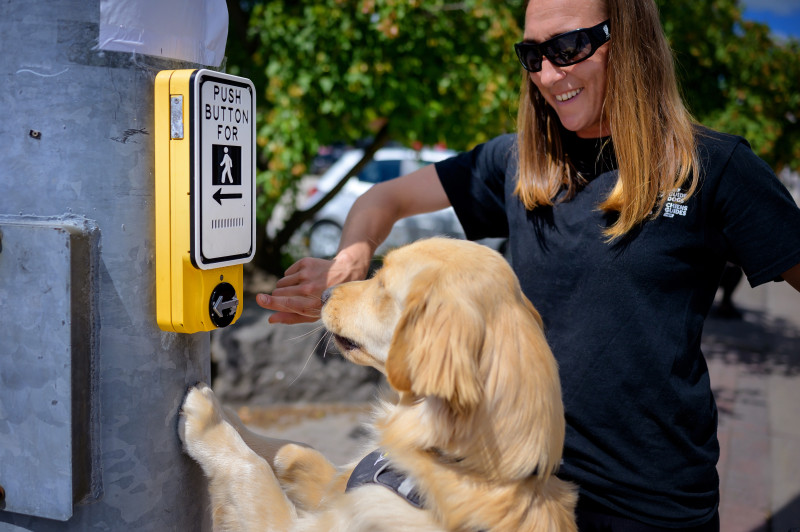
After the basics come the advanced courses — or what trainers call the “development stage.”
Think of it like upper-year classes with field placements.
Dogs practice their skills in different environments: quiet rural areas, busy downtown streets, shopping malls, and even public transit. They’re introduced to new challenges like moving obstacles, low-hanging branches, and crowded spaces.
The goal is independence. Trainers will also put on a blindfold and work with another trainer as a spotter to complete some assessment walks. With a blindfold on, the guide dog trainer provides less support, and the future guide dogs are assessed on how well they can make decisions independently.
Trainers want to see dogs take responsibility, applying what they’ve learned without being asked every step of the way.
Final Exams
The last stage of training is called consolidation. This is where everything comes together — the equivalent of final exams before graduation.
Dogs need to demonstrate they can consistently do the right thing, no matter what distractions or challenges come their way.
Trainers switch handlers, so dogs learn to perform for different people, not just their usual trainer.
Trainer blindfold walks simulate real-life guiding situations to ensure the dogs can consistently lead someone who is blind or low vision.
It’s the ultimate test of skill, confidence, and reliability.
Graduation and Career Paths
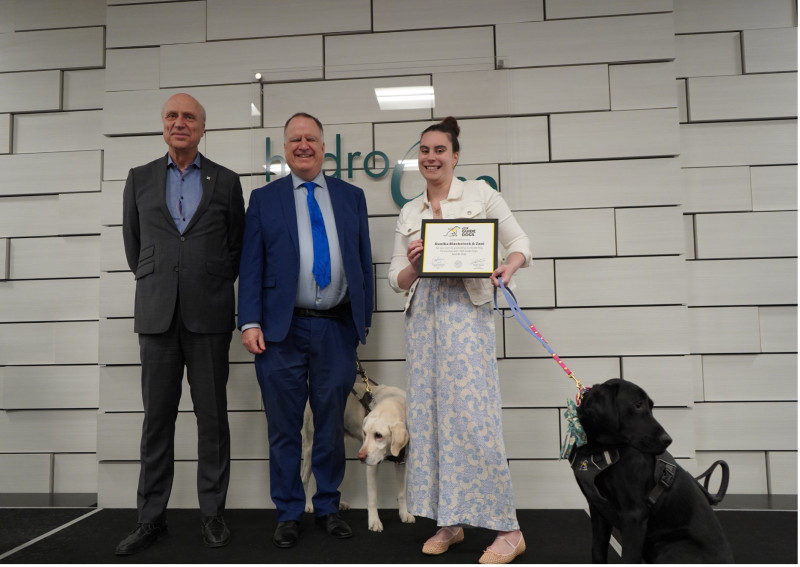
Just like in human universities, not every dog follows the same path.
Some may decide guiding isn’t the right career for them, and that’s perfectly fine. Just like people, dogs have different strengths and aptitudes — every dog finds their calling, whether that’s as a CNIB buddy or ambassador dog, in another type of service role with a different organization or as a much-loved pet!
For those who graduate, it’s match time.
Trainers carefully match each dog with a person who is blind, Deafblind or low vision, considering lifestyle, walking speed, stamina, and environment.
This is the critical moment when years of training and love pay off, changing someone’s life forever.
Why Puppy Raisers Are the Unsung Heroes
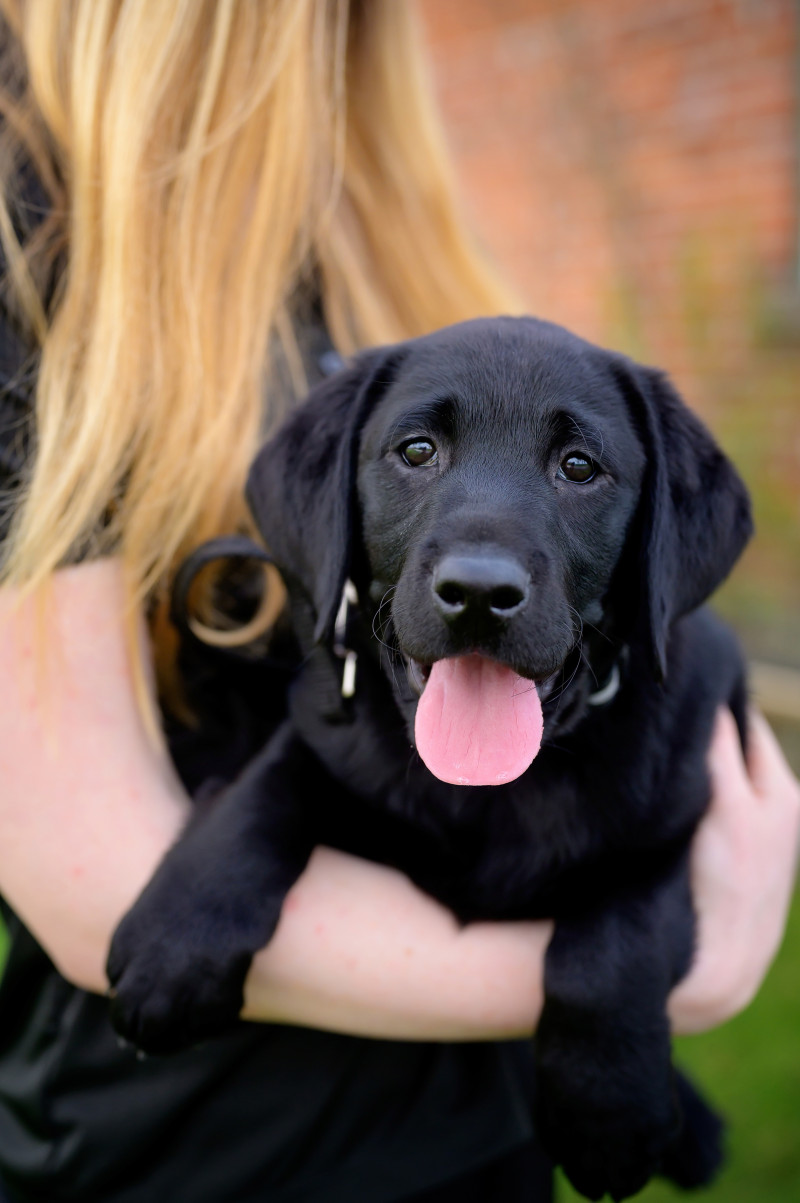
Behind every confident guide dog is a village of people who made it possible — and it all starts with our volunteers
Puppy raisers provide the foundation, teaching basic skills and giving each puppy the love and confidence they need to thrive. When that dog eventually heads off to “university,” the raiser has given them the very best start to succeed.
And while it’s never easy to say goodbye, raisers know they’re sending their dog off to potentially change someone’s life. It’s like watching your child head off to university and knowing they’re about to do something extraordinary!
Thinking About Becoming a Puppy Raiser?
Being a puppy raiser is more than training a dog. It’s about being part of a life-changing journey — from those first clumsy puppy steps all the way to graduation day.
There’s always a need for more raisers to help future guide dogs get their start. If you’ve ever thought about it, now’s the perfect time to learn more. Who knows? You might just find yourself sending a furry “freshman” to Canine Campus one day.
Want to help a puppy with purpose take their first steps on this journey? Become a volunteer puppy raiser!