
 Dialogue can open the door to understanding. When questions are asked respectfully and with a genuine desire to learn, honest answers can challenge misconceptions and help create more inclusive communities.
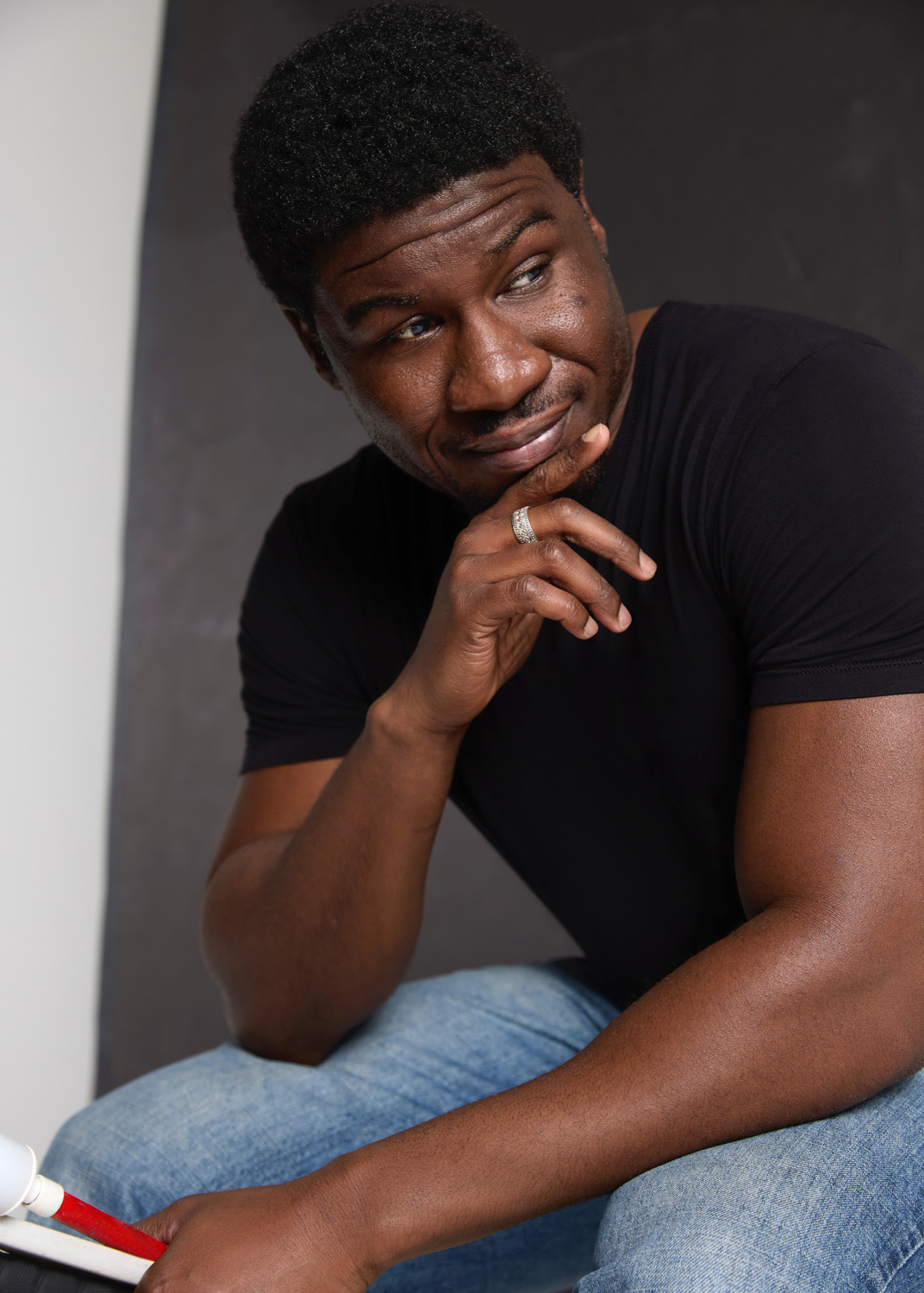
That’s why we invited Ben Akuoko, CNIB Advocacy Program Lead, to tackle some of the honest, sometimes awkward questions people have about sight loss.
What do you actually see? Is everything completely black?
Everyone who’s blind or has low vision has a different experience, but I have tunnel vision and see colour. My vision is like looking through an overlay of TV static, with black, grey, and white dots.
Would you want to have full sight if you could?
No. Plenty of people have full sight, and that doesn’t make their lives perfect. Why should sight be the benchmark for a good life? I’m content with who I am. What needs to change is the accessibility of the world around us.
What’s something sighted people do that frustrates you?
Sometimes people speak to the person I’m with instead of speaking directly to me. They assume that person is my caretaker or needs to answer on my behalf. I’m right there, so talk to me.
Do you recognize people’s voices?
Yes, especially if it’s someone I know and I hear them where I expect to. If we worked together every day and I heard your voice at the office, I’d probably recognize you. But if I unexpectedly ran into you in Mexico, I might not. Context matters.
Have you always had sight loss?
I was born with retinitis pigmentosa, which was diagnosed when I was two years old. My vision has deteriorated over the years, but I had much more vision when I was young and was able to pass as sighted, so that’s how I identified.
What was it like growing up with sight loss?
I was born in Canada to Ghanaian parents and grew up immersed in Ghanaian culture. In my experience, blindness was sometimes viewed as a curse. I was encouraged to hide my sight loss rather than use a white cane or identify openly as someone with sight loss.
I didn’t start connecting with the blindness community until I was around 28, and I started using a white cane when I was around 30. It took time for me to accept sight loss as part of my identity.
Did you see people like yourself represented in the blindness community?
No. Growing up, I didn’t see many Black people with sight loss who shared my interests and experiences. I was into hip-hop, basketball, and football, and I didn’t see people like me represented in the blindness community.
At times, I felt left out of both worlds. I didn’t fully see myself reflected in the blindness community, but blindness was also stigmatized within the cultural community I grew up in. It felt like a double whammy.
How do you think portrayals of blindness influence public attitudes?
Society can be influenced by what we see in movies and television. Historically, blindness has often been associated with poverty, helplessness, and needing to be taken care of. Those negative stereotypes can affect whether people see someone with sight loss as a potential friend, partner, colleague, or employee.
Imagine a TV show with a character who is blind or has low vision and is simply living their life. They have friends, relationships, interests, and a career. More portrayals like that could help people understand that blindness doesn’t prevent someone from living a full life.
What do people assume you need help with that you can do independently?
I don’t really like the way we use the word “independently” because we associate it with always doing things by ourselves. No one does everything alone. Independence is about getting something done, and it’s okay to ask for help.
That said, I do almost everything for myself, from getting around and finding things to cooking, cleaning, paying bills, and maintaining my home. I find different ways to do those things. I might use technology, my remaining vision, or my knowledge of somewhere I’ve been before. If I need help getting from one place to another, I ask someone.
Is it okay to say things like “See you later” or “Did you watch that movie?”
It doesn’t bother me at all. It’s part of the English language, and those expressions can mean different things. If someone asks, “Did you see that?” they might mean, “Did you notice that?” There are so many other things to worry about in life. Why would I care if someone says, “See you later?”
Are there questions about blindness that you find frustrating?
It depends on the question, the intention behind it, and whether I have a relationship with the person asking. If you’re genuinely asking because you want to learn, I’m an open book. But if someone approaches me without building any rapport and immediately starts asking personal questions, that can feel different. It comes down to intention and respect.
What’s something people get wrong about you?
People sometimes treat me as though I’m fragile. I’ve played football and basketball, and I’ve trained in Olympic wrestling. I’m a very physical and durable person, but people can still act as though they need to be extremely careful around me. Having sight loss doesn’t mean I’m going to break in half if I trip.
What do you wish people understood about blindness?
People with sight loss are people like anyone else. We have dreams and hobbies, and there are things we can have in common.
People with sight loss can also be resilient and adaptable, and you may learn something from someone whose experiences are different from yours. It’s important to look beyond the vision, find those commonalities, and get to know the person.
Changing attitudes begins with listening to people with lived experience. Your support helps CNIB amplify their voices, challenge misconceptions, and build greater understanding of blindness.
CNIB sends a heartfelt thank you to Ben Akuoko for answering our questions with such honesty and openness, and for helping Canadians better understand the many different experiences of sight loss.