
By: Kaitlyn Graham
CNIB Lake Joe’s New Arts Intensive Week
For blind and low vision artists, the challenge isn’t talent — it’s the societal and environmental barriers that shape access to creative spaces.
Art is often treated as a visual medium by default. That assumption shapes how art is taught, with demonstration-based teaching, visual reference sheets, and sighted-first class structures. Accessible resources and training are often overlooked in arts programs, leaving individuals with sight loss out.
CNIB Lake Joe is working to change that.
Arts-focused programming at CNIB Lake Joe
In July, 37 young adults with sight loss spent a week at CNIB Lake Joe – a one-of-a-kind, fully accessible camp in the heart of Muskoka – to channel their artistry during the first-ever Young Adult Arts Intensive Week (YAAIW).
Participants chose one of three streams – visual arts, media arts, or performing arts – and built skills in their chosen stream with the assistance of Lake Joe staff and guest facilitators.
Participants explored a shared theme – “The Story of Us” – by creating pieces that represented what matters to them, from sculptures of their dogs to photographs of items around camp that hold special memories.
The freedom to create
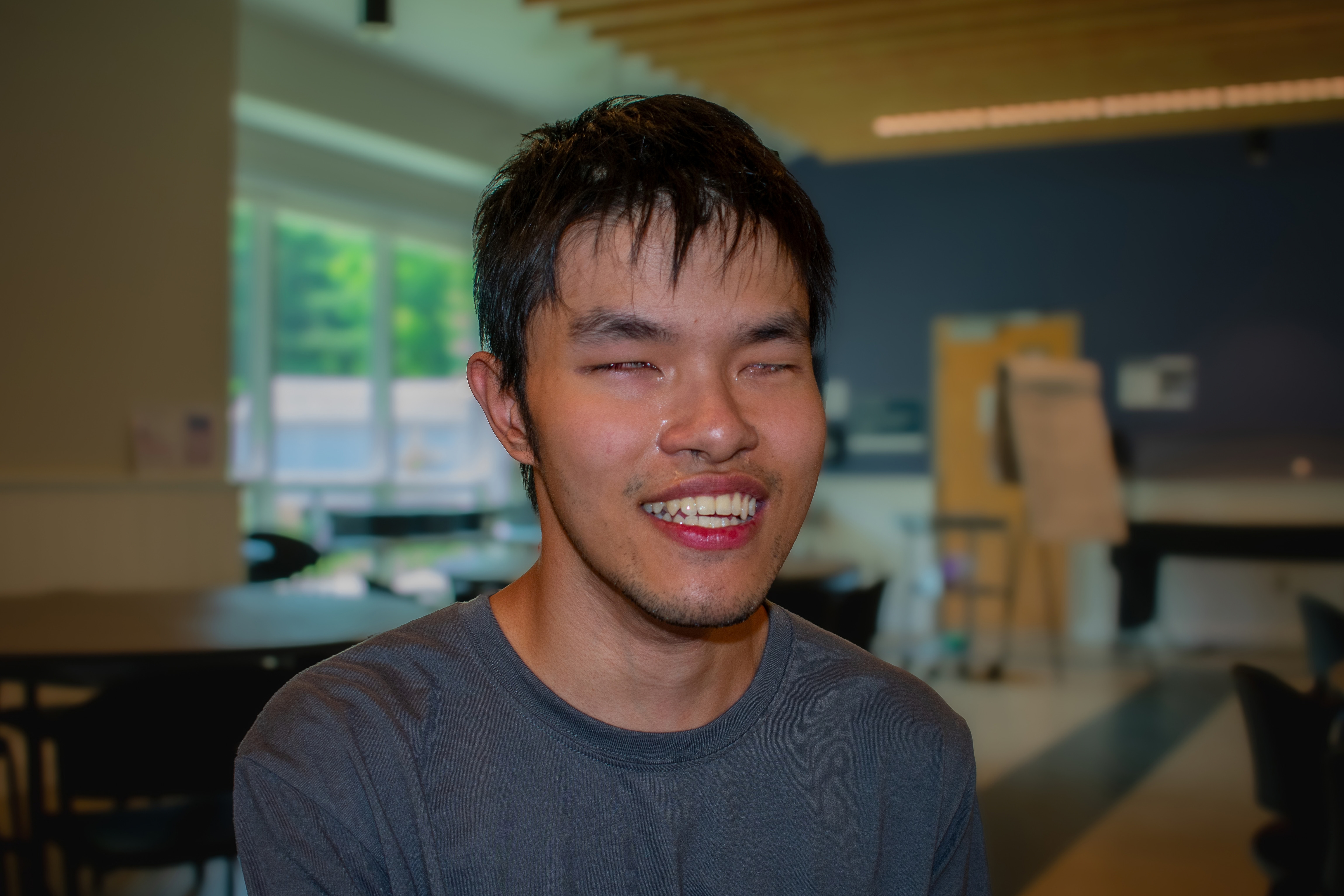
William, a performing arts stream participant, has played piano since early childhood, but has encountered many inaccessible learning spaces along the way.
"Just because someone’s visually impaired, it doesn’t mean they should be pressured having a fixed timeline for them to complete each goal,” he said.
William and his fellow performing arts group participants learned songs in a way that worked best for them, at their own pace. The facilitator played each song a few times, then taught it by rote, saying lines aloud for participants to repeat, working verse by verse in small, scaffolded chunks.
The experience was "like an endless connection of puzzles coming together and people uniting," said William. "You actually feel like you're flying here."
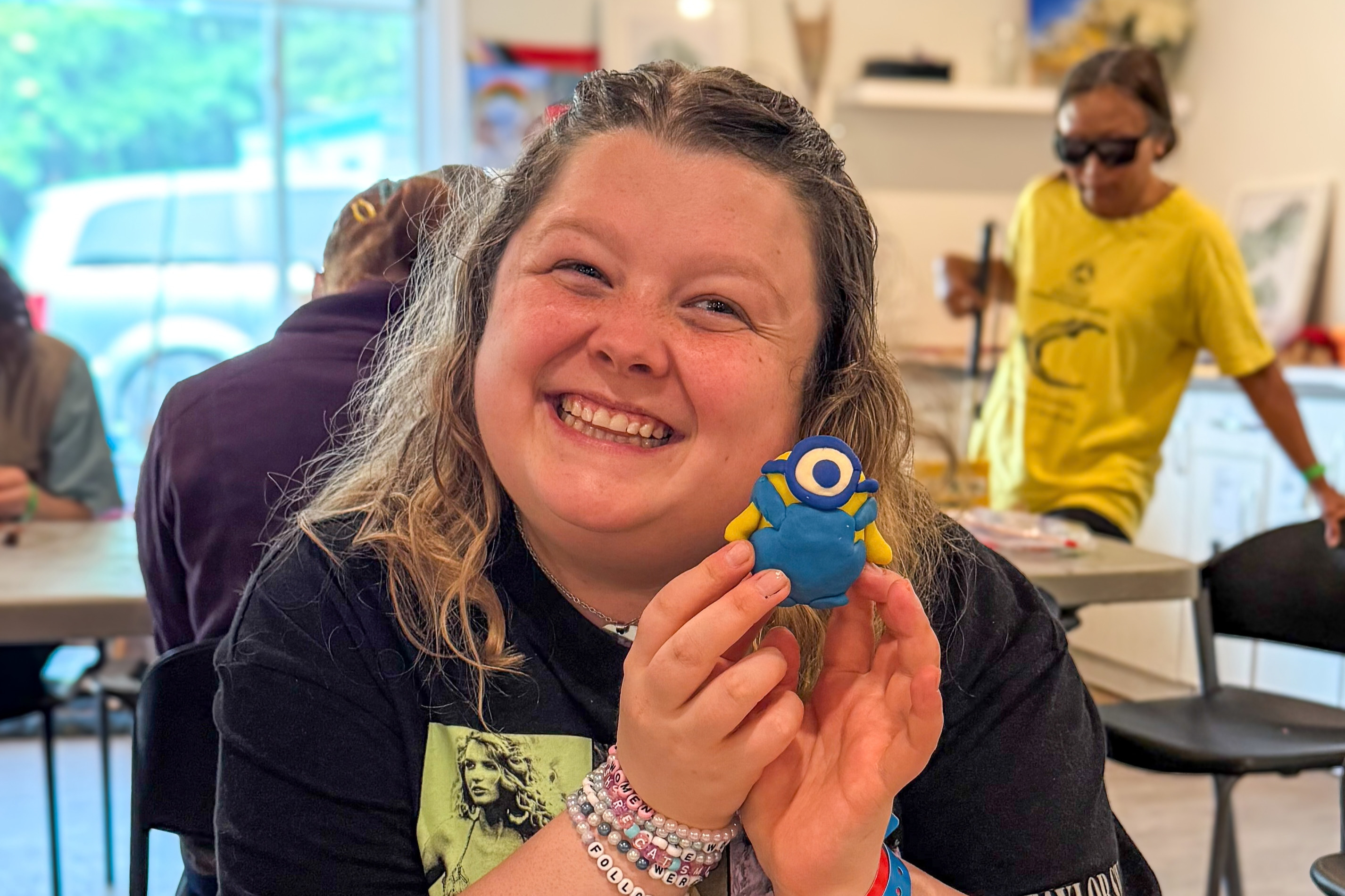
Alicia, a visual arts participant, said she’d always felt pressure to achieve perfection when doing art activities in the past.
“Here, we’re allowed to fully express ourselves and everyone can bring their own uniqueness to a project,” said Alicia.
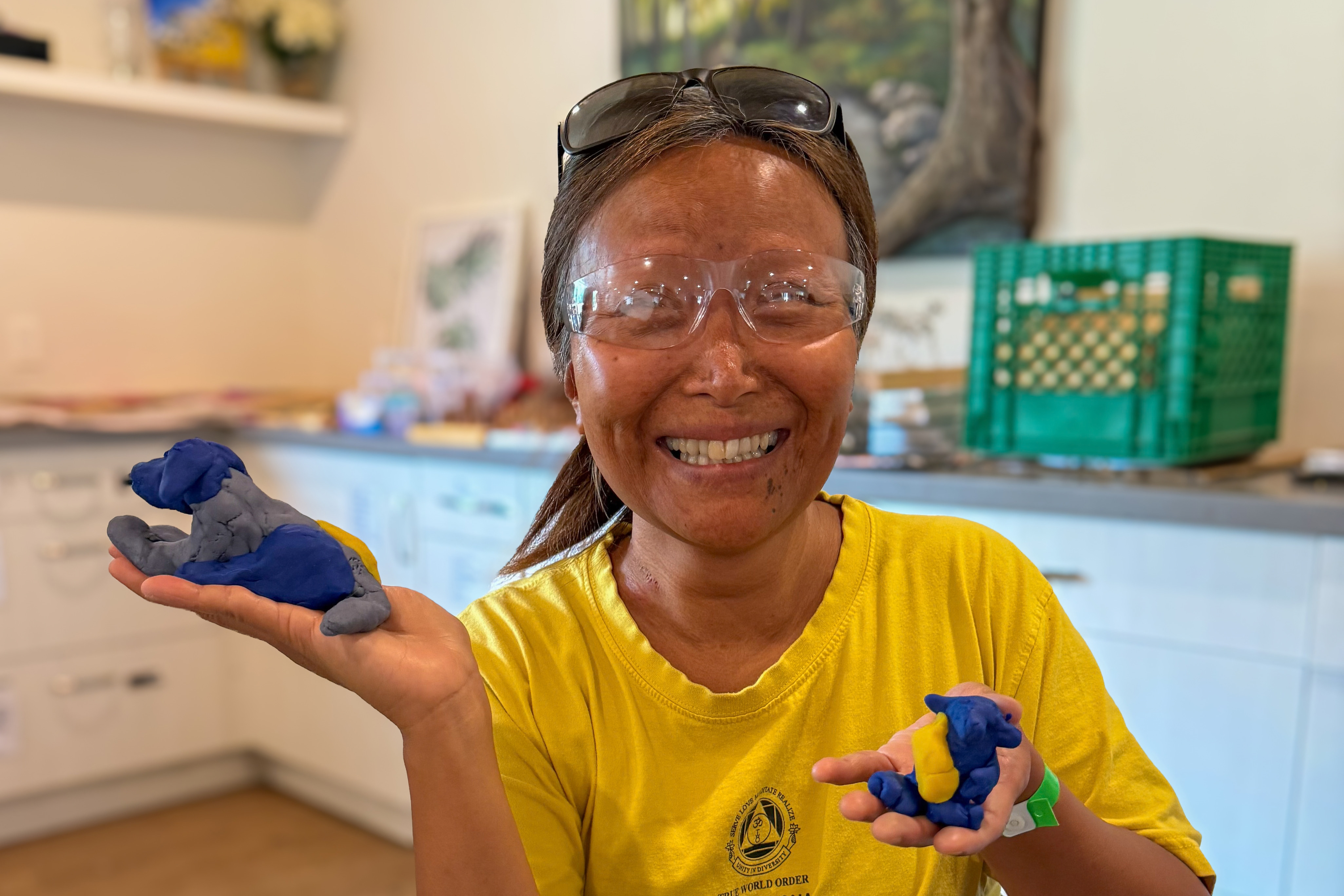
While some YAAIW participants entered an arts stream to learn something new, others wanted to expand their portfolios. One visual arts participant, Vivian, is a practicing artist in the Greater Toronto Area.
“I learned a new technique to do wire-frame sculpture,” said Vivian. “I found it fun to do something sharp, because wire is hard to handle for someone who’s blind. Everybody's at a different stage, but we just learn it together as we go.”
Confidence through creativity
YAAIW wasn't only about creating art; it was also about helping participants gain confidence and independence.
With CNIB Lake Joe staff available as human guides, participants in the media arts stream put their lessons in composition and angles into practice as they explored camp, capturing photos of the landscape, people, and activities. By the end of the week, participants had gained skills they could continue using beyond Lake Joe, including taking photographs for personal and professional projects.
Across all three streams, participants tried new things, from singing in a choir and painting independently to taking photographs on their own. They left with new artwork, greater confidence, and a supportive community in which they could nurture their creativity.
What the future holds
Young Adult Arts Intensive Week reimagines what it means to be an artist with sight loss. CNIB Lake Joe hopes to expand the program to offer a greater selection of arts disciplines. With the right funding, participants could use podcasting software, try graphic design, or participate in writing workshops.
To support accessible arts for people with sight loss, consider donating to help CNIB push for more positive change in the arts and beyond.