
By: Taylor Bauer
On a cold February morning, I ordered an Uber to pick me up from my workplace in Calgary to take me to a meeting. It was a routine ride request, something most people would never have to think twice about.
A driver accepted the trip and arrived shortly after. I was standing at the designated pickup location in front of my office with dog, Wallace, who was wearing his guide dog harness clearly labelled “Guide Dog” in large print in both English and French.
When the driver arrived, he stopped across the street instead of pulling up to where I was waiting. He rolled down his window and immediately told me he would not take the dog. I calmly explained that my dog is my guide dog and that I am blind. He told me that I needed to book a “Pet Uber.” I tried again to advocate for myself, this time explaining both the law and Uber’s own service animal policy. He refused and drove away.
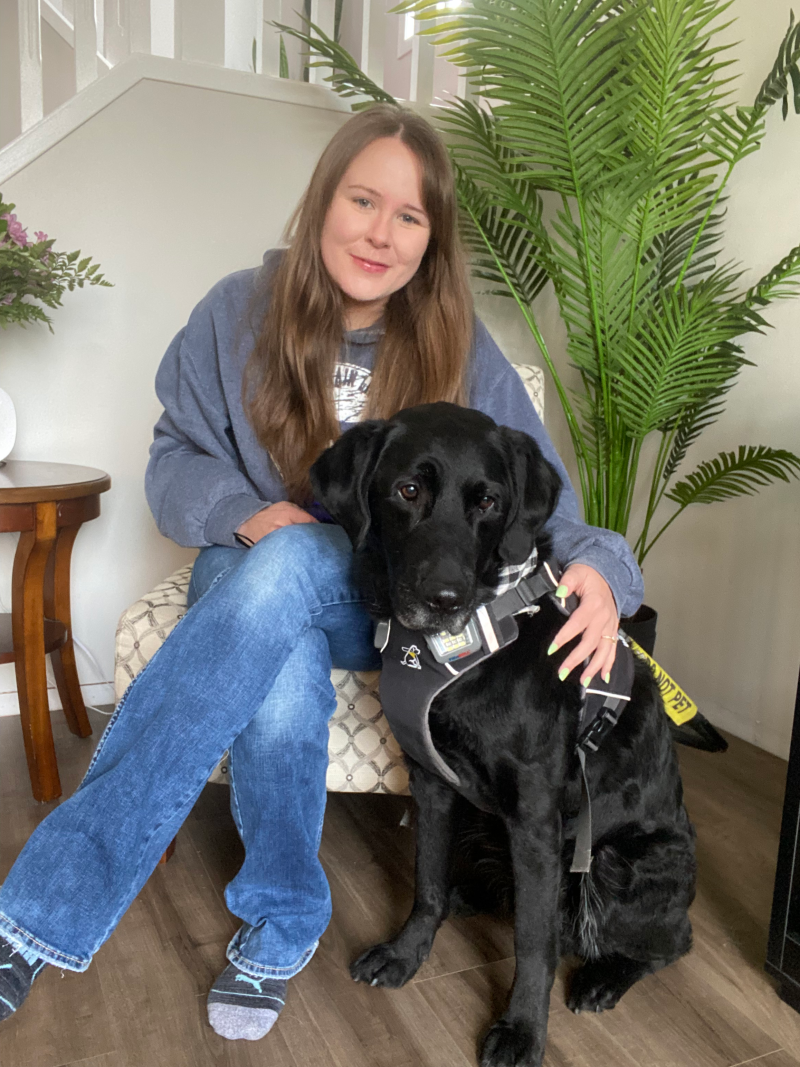
This should never have happened, plain and simple. Under provincial law, discriminating against a person with a disability who is working with a guide dog is prohibited. Discrimination includes denial of access to any premises or service in which the public would normally have access, including taxi and ride-for-hire services.
I’ve enabled Uber’s service animal self-identification feature, which notifies drivers upon accepting the ride that I travel with a service animal. That notification also outlines their legal responsibility to accept the ride and references Uber’s service animal policy. There should have been no confusion, no surprise, and no misunderstanding. Yet I was still denied service, left standing on the sidewalk, late for my meeting, once again forced to justify my right to access transportation.
Guide dogs are not pets. They are mobility aids and refusing a guide dog team access isn’t just an inconvenience; it directly impacts my ability to get to work, attend appointments, and participate fully in my community. Arguably the most exhausting part is how often this happens. Each time forcing me to decide, yet again, whether I have the energy to educate, advocate, and push back.
This time, I decided to push back and called the Calgary Police Service non-emergency line to file a report under the Alberta Blind Persons’ Rights Act, which protects the right of guide dog handlers to access public services, including transportation. I was pleasantly surprised by how the interaction went with the officer who took my statement, Constable Lissel. While not familiar with the legislation at the time, Constable Lissel truly listened. She asked thoughtful questions, acknowledged the issue, and told me she would do her homework and read up on the Act.
Two days later, I received an email from Constable Lissel confirming that the Uber driver had been spoken to and issued a summons under the Alberta Blind Persons’ Rights Act.
I don’t yet know the final outcome, but that isn’t the point of sharing my story. What matters is that the law was taken seriously, a guide dog handler was believed, and a police officer took the time to learn, act, and use the tools available to address discrimination.
Too often, incidents like this are brushed aside as “just part of life” or not worth the effort. But this experience showed me that action is possible, and that law enforcement can play a role in addressing the repeated injustice and discrimination faced by guide dog handlers.
Accessibility doesn’t happen by accident. It happens when people listen, learn, and choose to act.
If you’d like to learn more about your rights as a guide dog handler, visit cnib.ca/knowyourrights. To also find out more about how police officers can enforce the Blind Person’s Rights Act in Ontario, watch our 30-minute guide dogs police training video.