
Introduction
Welcome to the CNIB Guide Dogs team! We're excited to have you with us as we help raise these wonderful future guide dogs. From tiny puppy paws to life-changing partnerships, their impact is truly remarkable, and we want to share their journey with the world!
Social media is a fantastic way to showcase the wonderful work you're doing, and to give our community a behind-the-scenes look at what it’s like to raise a puppy.
We actively share on:
To help us all stay aligned and represent CNIB Guide Dogs in a positive way, we've created these guidelines.
Please note: CNIB monitors social media to ensure compliance with our guidelines. If we identify content that does not align with these guidelines, we may reach out to discuss its removal. Thank you for your cooperation!
Promotion
Our dogs represent CNIB and our mission. Therefore, they cannot be used for external promotion, fundraising, or marketing. Please reach out to volunteer.guidedogs@cnib.ca if you need further information.
Media Opportunities
If a reporter contacts you, or if you're offered a media opportunity regarding your volunteer role with CNIB Guide Dogs, it's important to coordinate with our team by emailing volunteer.guidedogs@cnib.ca. We will equip you with key messaging and resources to ensure consistent and accurate communication.
Corporate Partnerships
Our partnerships are vital to CNIB. Occasionally, we may ask puppy raisers to attend events with corporate partners to support volunteer recruitment, raising awareness, fundraising, or puppy socialization. If you have any questions about these events, please contact your Puppy Development Trainer so we can best support these valuable relationships.
Starting Your Own Account
Here are some important things to keep in mind when photographing the future guide dog in your care:
- Whenever possible, use images of future guide dogs in their training vests or harnesses
- Avoid images exhibiting inappropriate behaviour such as:
- Being fed treats.
- Sitting on furniture.
- Playing aggressively.
- Showcasing others petting future guide dogs in their training vests/harnesses.
If you or a family member are passionate about social media, you’re welcome to create accounts on behalf of the dog in your care. If you choose to do so, please keep the following guidelines in mind:
- Share your photos with CNIB. We will need them for our own marketing efforts.
- Clarify your role. You do not represent CNIB officially. Your content and bio should state that you are a volunteer caring for the dog.
- Update your bio. Your Instagram/TikTok bio should include: “For official CNIB Guide Dog accounts, visit [@cnibguidedogs].”
We look forward to seeing the adventures you and your future guide dog share!
Making Your Posts Accessible
To ensure your content can be enjoyed by all members of our CNIB community, here are a few tips to make your social media content accessible.
- Use camel case in hashtags. By capitalizing the first letter of each word, screen readers and text-to-speech software can read each word separately, not as one long word. This improves clarity and accessibility for users. Example: #SomethingLikeThis versus #somethinglikethis
- Avoid acronyms. Screen readers don’t recognize acronyms like ICYMI (in case you missed it), DYK (did you know), FWIW (for what it’s worth), or SMH (shaking my head), and many others. Instead of reading them as individual letters or their intended meaning, the software tries to pronounce them as full words, which can cause confusion or unintended meanings. For example, “DYK” may be misread as an inappropriate word.
- Avoid abbreviations. Abbreviations can mean different things depending on the user's language settings. For example, “Gov” is read as “government” in British English but “governor” in American English. To avoid confusion, it's best to use full words whenever possible.
- Use hashtags sparingly and place them at the end of your posts. Overloading posts with hashtags can negatively impact users who rely on text-to-speech assistive technology, as it can interrupt the flow of the content. To maintain clarity and accessibility, limit the number of hashtags you use and keep them at the end of your post. This helps prevent screen reader users from getting lost within the text.
- Limit your use of emojis. Emojis add visual expression to a post, but text-to-speech software reads each one aloud with a description, which can be time-consuming and frustrating for users. To keep content accessible, limit emojis and place them at the end of your paragraphs.
- Avoid using GIFs. GIFs are generally inaccessible because they don’t support captions, alternative text, or described audio. However, you can still use them if you plan ahead. Ensure your post clearly describes the GIF’s content so all users can understand it.
- Include image descriptions. In addition to adding alt text to images, include an image description in your post as well. This helps users with low vision who may not use screen readers but rely on zooming in, which can obscure parts of the image. A written description in the post will make sure they still understand the content, while screen reader users can skip repeated information. If you forget to add alt text, don’t worry—you can always go back and update it.
Social Media Dos and Don’ts
When posting on social media, remember that you do not represent CNIB officially. Your bio, captions, and content should clearly state that you are a volunteer with CNIB Guide Dogs. For example, we ask all puppy accounts to include in their bio: “For the official CNIB Guide Dogs accounts, visit cnibguidedogs.ca.”
- Do tag @cnibguidedogs. We want to see all your hard work and progress!
- Do post photos or videos that show your puppy socializing, playing, having fun, and learning.
- Do post photos or videos in appropriate places like your home, safe public outings, and public transportation.
- Do share your future guide dog’s progress or success.
- Do use captions that describe what you’re doing in the photo. For example, “Today Rudy and I worked on self-control at the pet store! We walked by different animals and all the food aisles. Rudy was a little sniffy at first, but he did great!”
- Do Not show a young puppy off-leash or not attached to a person in a public place. If the dog has a reliable stay and you are in an enclosed area, you can speak to your dog's trainer regarding having the dog unattached in public for photo opportunities.
- Do Not post any captions that relay frustration or negativity. For example, “Sam was TERRIBLE today. She barked at people, chewed on her leash, and was so bad!”
- Do Not post any photos, video or content relating to medical or health related issues.
- Do Not post photos or video with the pup chewing or playing with an inappropriate toy or item, see below for the guide.
- Do Not post photos or video with the pup on any type of furniture.
- Do Not post photos or video with the pup eating inappropriate treats.
- Do Not post photos or video of the pup exhibiting inappropriate behaviours like jumping on people, mouthing someone, barking.
Future Guide Dog Uniform
A future guide dog puppy should wear the CNIB Guide Dogs puppy vest whenever they are in public places where dogs are generally not allowed. The vest serves as a clear visual indicator to the public, explaining why the puppy is granted access as part of their development. Additionally, the puppy vests help raise awareness about CNIB Guide Dogs, and many of the guidelines here are designed to make it easier for the public to learn more about puppy raising, client services, donating, and other opportunities through our website.
The following guidelines for puppy vests must be followed:
- Keep vests clean and in good condition. They should be free of visible wear and tear.
- Do not cover or alter branded elements. The logos on the sides and chest must remain visible, and vests should not be modified or decorated.
- Request replacements as needed. If a vest becomes too small, faded, or damaged, contact your PDT for a replacement.
- Vests are for active CNIB future guide dogs only. They should never be worn by career change dogs or pets.
- Future CNIB guide dogs cannot be photographed wearing any clothing items beside their puppy vest.
You can also get more in-depth tips from professional dog photographer, Danica Oliva, who has worked closely with us at CNIB Guide Dogs.
Taking the Perfect Photo / Video
If you’re looking for the best way to capture those special moments with your future CNIB Guide Dog, here are a few tips!
- Lighting is everything. Take photos in even natural light that is facing the dog. For example, pose your dog facing a window with natural light rather than the window being behind the dog.
- Portrait style is ideal for social media. When taking photos or videos for social media, it is generally recommended to hold your phone camera vertically in portrait format rather than horizontally in landscape format.
- Make sure the focal point of the photo or video is centered. Your dog should be centered in the photo as the focal point of the image or video.
- Ensure your subject is in focus. Tap on your phone screen to focus on the desired area when taking a photo.
- Ensure your camera is stable when taking a video. To avoid shaky footage, make sure you’re standing still with your elbows close to your body and following the dog’s movement slowly. If your dog is running or playing a little too quickly and you want to capture the moment, try to zoom out or take a step away from them to have more room to capture what they’re doing.
- Avoid over-editing photos. Sometimes, the most natural photos are the best photos.
- Avoid using the Zoom. The digital zoom on our phones can degrade image quality. Instead, move closer to your subject to take a photo or video.
You can also get more in-depth tips from professional dog photographer, Danica Oliva, who has worked closely with us at CNIB Guide Dogs.
Important: ‘Before you post’ Checklist!
Check for stress signals and behaviour:
- Are the dog’s ears pinned back?
- Does the dog have whale eye? (Side eye/can see the white of the eye)
- Is the dog yawning?
- Is the dog displaying a behaviour that is frowned upon by CNIB Guide Dogs? (sitting on the bed or couch, etc.)
- *If applicable* Are the dog’s playing in a way that is respectful, fun and could not be deemed aggressive?
- *If applicable* playing with a toy or item that is not approved by CNIB Guide Dogs.
Privacy:
- Is anyone in the photo identifiable who didn’t consent to being in the picture?
- Does the picture or post disclose any medical information about any dog in the CNIB Guide Dogs’ program.
- *If applicable* is this picture or post disclosing that a litter has been born before CNIB Guide Dogs has made an official announcement.
- Does the post disclose any trainer updates on the dog in or previously in your care.
Quality:
- Is the picture good quality? (Is it blurry? Can the dog easily be seen?)
- *If applicable* is the dog’s vest clean and its wording easily visible?
Behaviour Reference Page
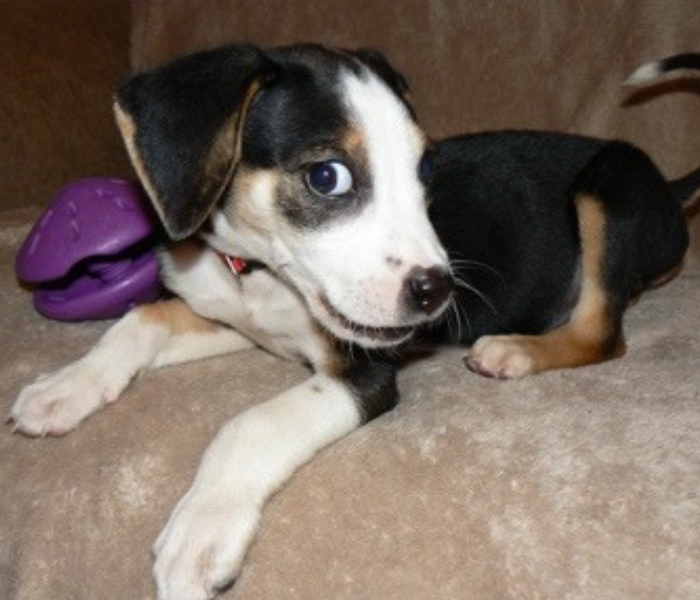 |
Whale eye – you can see the white of the dog's eye |
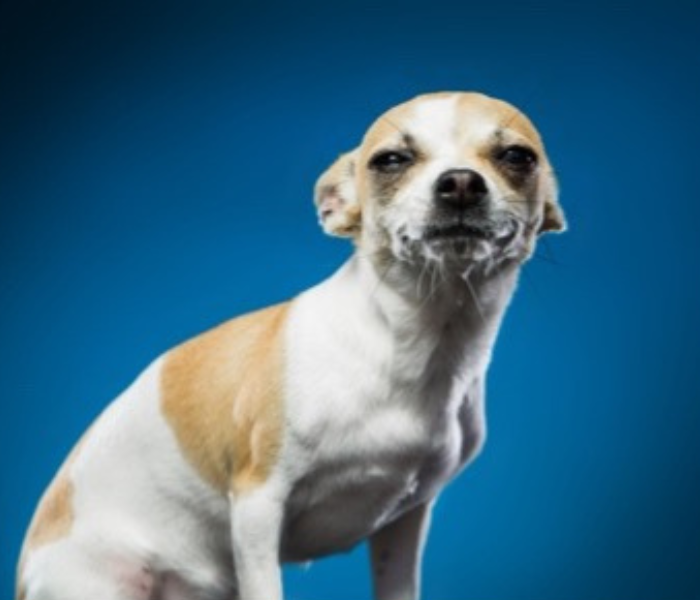 |
Ears pinned back |
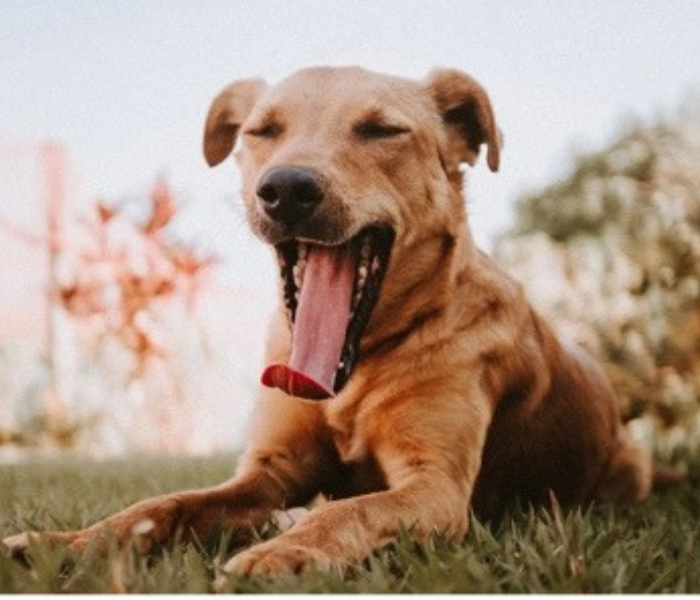 |
Yawning |
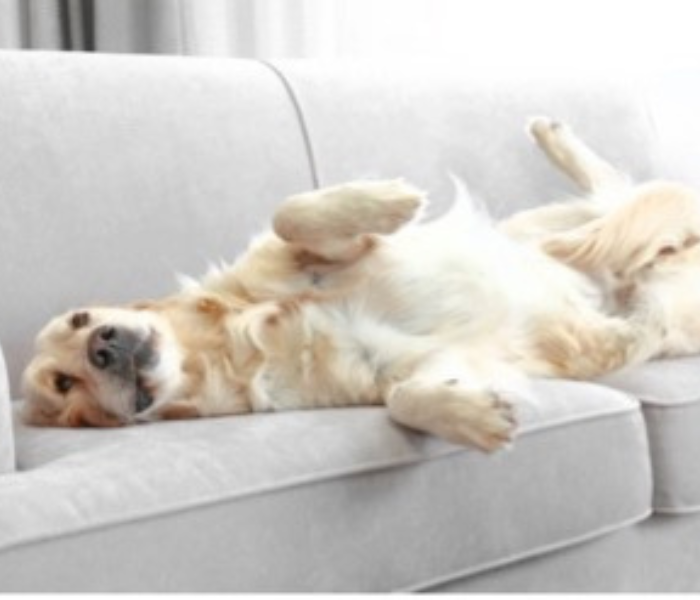 |
Dog on furniture – this behaviour is discouraged by CNIB Guide Dogs encourages |
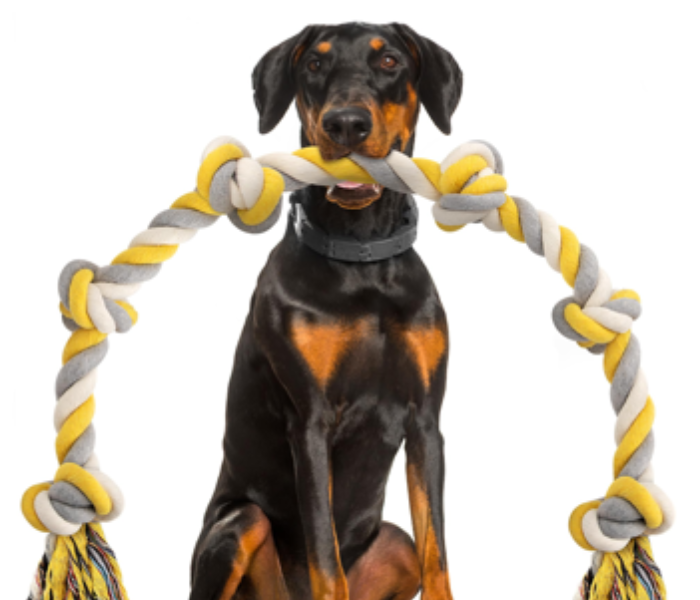 |
Dogs with toys and items not approved by CNIB Guide Dogs staff |